

Home · Blog · Fleet management for limestone mines
Blog · Limestone

Fleet management for limestone mines: blending, crusher feed and shift reports

In a limestone mine, fleet management is not only about keeping dumpers moving. The crusher feeds a cement kiln that runs to a narrow LSF band, so the system has to decide which face each dumper loads from, record every trip and its tonnes, and give the shift a blend and production report. Indian Bureau of Mines data show almost all Indian limestone comes from captive mines, which is why plant-side quality drives the mine plan.

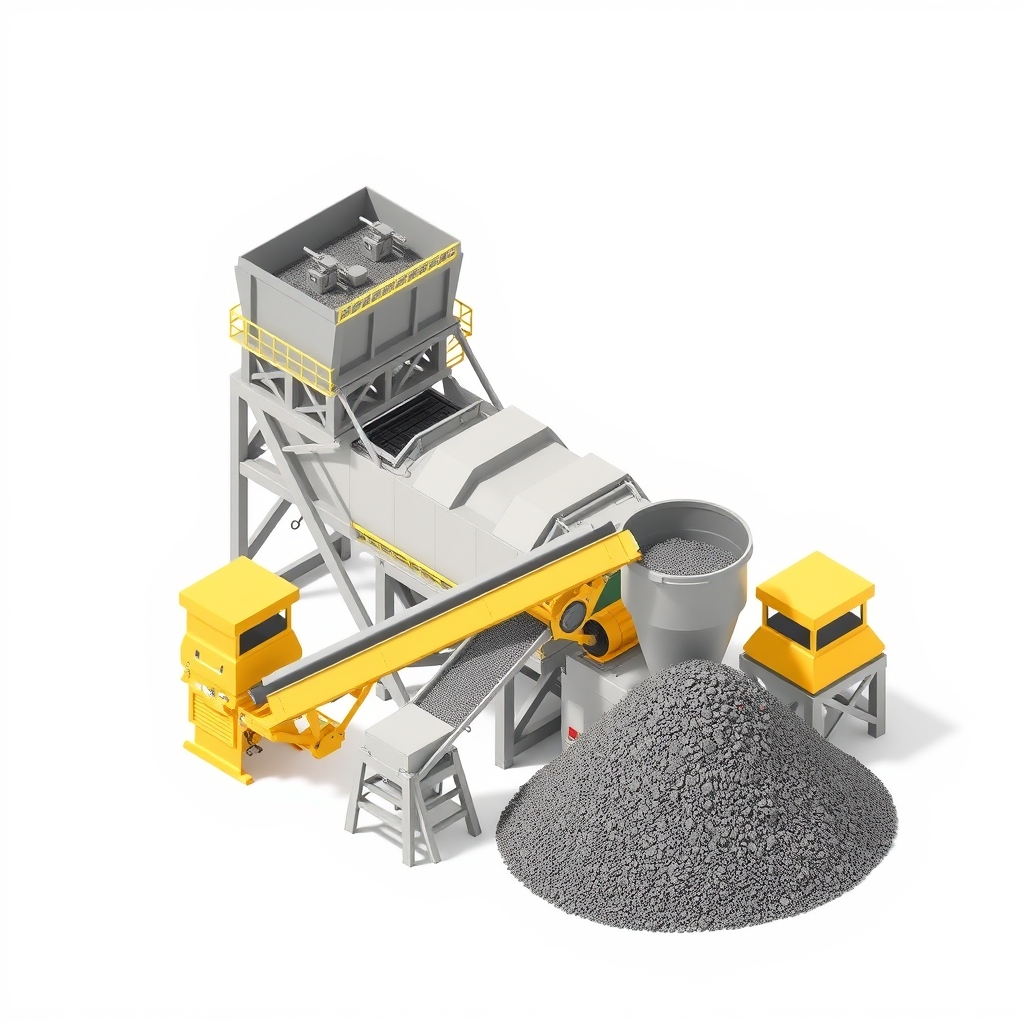
Limestone crusher fed by dumpers from several faces at a cement captive mine
01 Context

Most limestone is mined for a cement plant next door

IBM's December 2024 statistical summary puts India's limestone output at 451 million tonnes in 2023-24, up from 405.7 million tonnes in 2022-23. Rajasthan, Madhya Pradesh, Andhra Pradesh and Chhattisgarh are the largest producing states. A captive mine has one customer, and that customer cares about chemistry first.

451 Mt
limestone, 2023-24 (IBM)
02 Quality

Why LSF decides where a dumper goes

Lime saturation factor (LSF), silica modulus (SM) and alumina modulus (AM) describe how a kiln feed will burn. Grade varies face to face and bench to bench, so a shift that sends too many loads from a low-grade face moves LSF out of band at the stacker. The fleet system's job is to turn the blend plan into loads per face per shift and to show, during the shift, whether the plan is being followed.

Limestone grade control →
03 Blending

ROM and HGLS: keeping two streams apart

Many cement mines separate run-of-mine limestone from high-grade limestone (HGLS) kept as a sweetener, plus overburden and topsoil going to dumps. Each trip needs its material tag. Minocular takes the material from the loading polygon the excavator works in and the dump geofence the dumper unloads at, so ROM, HGLS and waste are counted separately without operators typing anything.

04 Dispatch

Excavator–dumper match

With too few dumpers per excavator the shovel waits; with too many, dumpers queue. A dumper within about 100 m of the shovel counts as waiting and within about 25 m as loading, thresholds tuned mine by mine from GPS and BLE beacons. OITDS uses live positions and queue lengths to send each empty dumper to the excavator where it will wait least, and can weight that choice by the grade the crusher needs next.

How OITDS assigns dumpers →
05 Plant

Crusher feed and the plant link

Trip end is a dump-area geofence plus the dump body sensor. At the crusher this gives tonnes delivered per hour from the mine side, which can sit next to the crusher's own TPH, the stacker and reclaimer and a cross-belt quality analyser where the plant has one. When the crusher stops, queuing dumpers show up on the live map within minutes.

Operations dashboard →
06 Reporting

The shift report writes itself

Shifts in a cement captive mine usually run A, B and C. A shift report built from trips gives tonnes by material, face and excavator, trips per dumper, cycle time split into load, haul, dump, return and delay, idle hours and fuel per machine. Supervisors check it at shift change instead of compiling it from logbooks.

Reporting and analytics →
07 Cost

Diesel per tonne

Fuel comes from whichever source the mine has: tank level sensors, OEM telemetry, a fuel management system on the bowser that reads the machine's RFID tag, or an offline app. Joining fuel to trips gives litres per hour and litres per tonne by machine and shift.

Fuel monitoring →
08 For buyers

What to ask for in a limestone fleet system

Material tagging per trip, a blend view by face and shift, dispatch that understands grade, a crusher-side tonnage feed, automatic A/B/C shift reports and fuel by machine. If a proposal shows only dots on a map, the blending part is missing.

Minocular fleet management →
Source

Indian Bureau of Mines, Statistical Summary for Important Minerals (Dec 2024)

Limestone production by state for 2022-23 and 2023-24 (451.0 Mt) and the captive versus non-captive split.

Open the source →
Mohit Sahu, Co-founder and Tech Lead, Minocular
About the author

Mohit Sahu

Mohit is a mining engineering graduate of NIT Raipur. He leads Minocular's product and engineering, from fleet dispatch to the drone and AI platforms.

Questions about fleet management in limestone mines

What is fleet management in a limestone mine?

Tracking excavators and dumpers, assigning dumpers to excavators, recording every trip with its material and tonnes, and producing shift, blend and fuel reports for the mine and the cement plant.

How does fleet management help hit the LSF target?

It turns the blend plan into loads per face per shift and shows during the shift whether those loads are actually being sent, so the mix can be corrected before the stacker is out of band.

How much limestone does India produce?

The Indian Bureau of Mines reports 451 million tonnes in 2023-24.

How is ROM separated from HGLS in trip records?

Each trip takes its material from the loading polygon the excavator works in and the dump geofence where the dumper unloads, so ROM, HGLS, overburden and topsoil are counted separately.

Does it work in mines with poor network?

Yes. Devices store data and forward it through other vehicles to Wi-Fi points at the crusher, workshop or control room.

Related
INDUSTRY
Limestone mining
PRODUCT
Mining fleet management
PRODUCT
Grade control
CASE STUDY
The first hour of the shift
See your limestone faces, dumpers and crusher feed on one screen.
Book a Demo