
Loading: spot time, passes and payload
Loading starts when the dumper spots at the shovel. Spot time, bucket passes and payload per trip tell you whether the shovel or the operator is the limit. Under-loaded trips show up here first.
Every dumper trip splits into five parts: loading at the shovel, hauling loaded, dumping, returning empty, and delay. Most mines watch the total. The gains come from watching each part separately, because a queue at the shovel and a slow ramp look the same in a shift total but need different fixes.

Loading starts when the dumper spots at the shovel. Spot time, bucket passes and payload per trip tell you whether the shovel or the operator is the limit. Under-loaded trips show up here first.
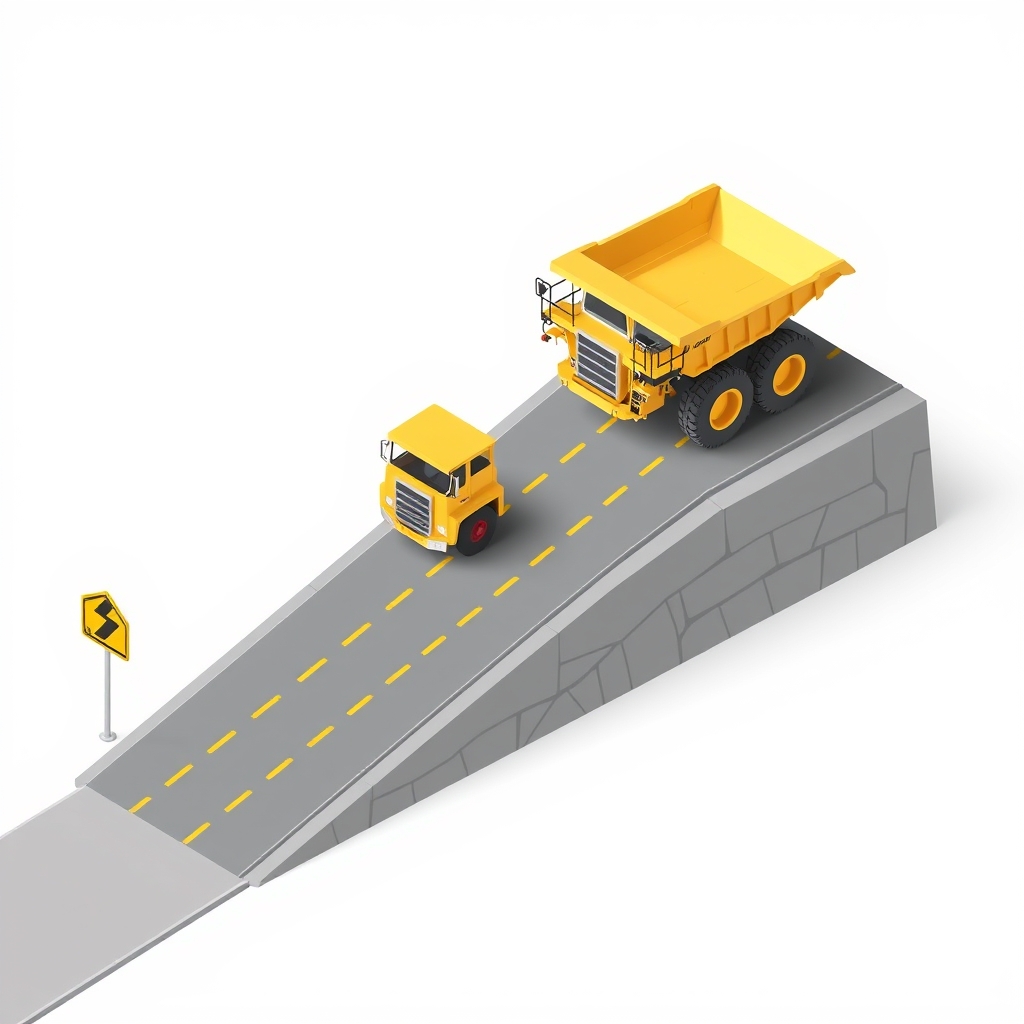
Loaded travel speed by road segment is where haul road condition shows. A stretch steeper than the 1:16 design grade, or a rough patch, slows every loaded truck on every trip.
Queue at the tip or the crusher is often bigger than the time spent tipping. If trucks wait at the crusher, more trucks will not help.
Empty return time shows route choice and speed. A long empty return can mean the dumper is assigned to a shovel that is too far away for its next load.
Idling, breakdowns, shift change and stops with no reason recorded all land here. At one cement captive mine, the time to first load at shift start fell from 32 to 17 minutes once it was measured every day.
Mohit is a mining engineering graduate of NIT Raipur. He leads Minocular's product and engineering, from fleet dispatch to the drone and AI platforms.
Loading at the shovel, hauling loaded, dumping, returning empty, and delay. Cycle time is the sum of the five.
It depends on the mine, which is why each part has to be measured. Queues at the shovel or crusher and unrecorded delays are common losses that a shift total hides.
GPS and status data from an in-cab terminal on each dumper mark when it spots, leaves loaded, tips and returns. Minocular splits every trip into the five parts automatically.
Not if trucks are queuing at the shovel or crusher. Extra trucks lengthen the queue instead of moving more tonnes.
A common design standard is 1:16 or flatter. Steeper stretches slow loaded trucks and burn more fuel, brakes and tyres.