

Home · Blog · Fuel management system
Blog · Fuel

Fuel management system for mines: from fuel farm to machine tank

A fuel management system for mines records every litre of diesel from the moment it is delivered to the fuel farm to the moment it goes into a machine's tank. It combines tank level gauging, a dispenser or bowser that identifies each machine by RFID before fuelling, and reports that reconcile litres received, litres issued and litres burnt per machine.

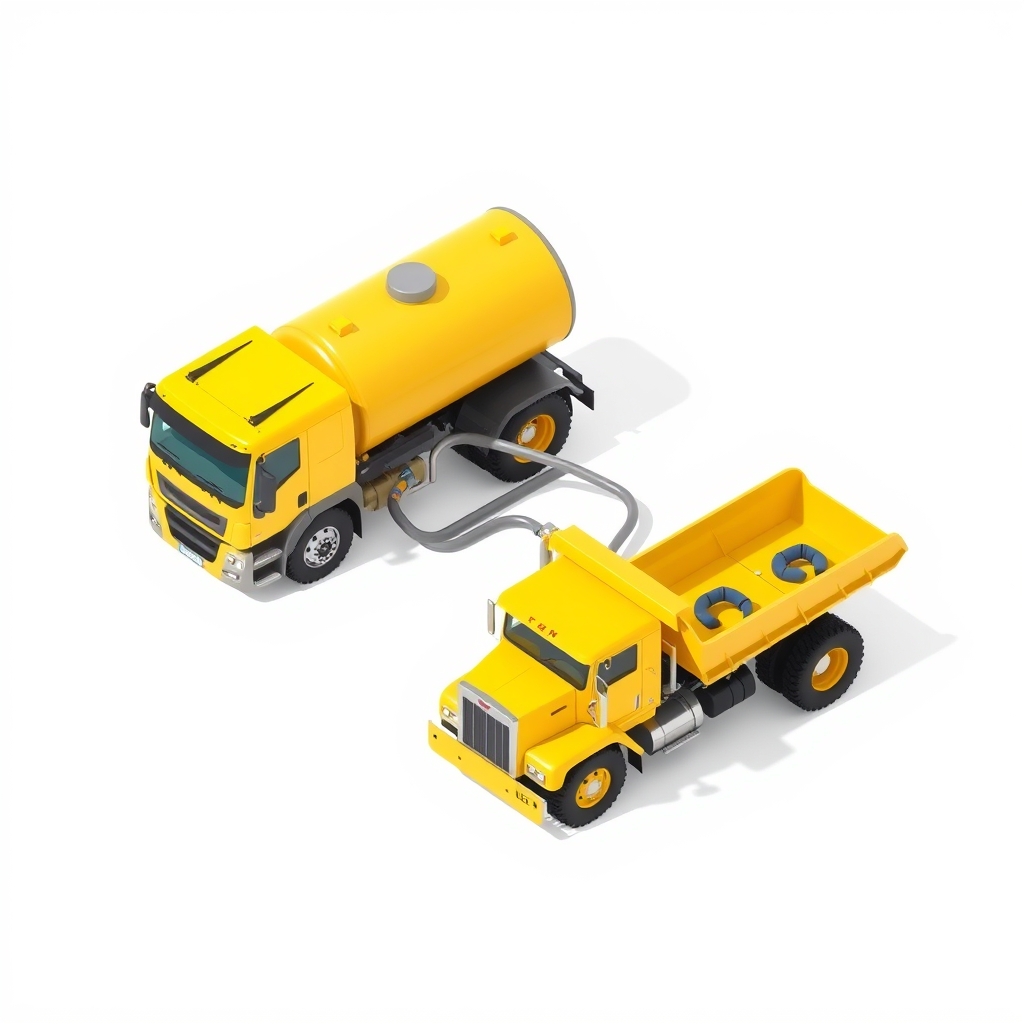
Bowser refuelling a dumper, recorded by a fuel management system for mines
01 Definition

What a fuel management system is

A fuel management system (FMS) is the hardware and software that controls diesel at a mine. It answers three questions: how much fuel arrived, which machine received how many litres, and how much each machine burnt doing its work. At Indian opencast mines the FMS usually sits on the fuel farm and on the mobile bowsers that refuel dumpers and excavators at the face.

02 The parts

Tank, dispenser, machine and report

At the fuel farm, level gauges measure what is in each bulk tank. At the dispenser or mobile bowser, an RFID reader on the nozzle identifies the machine's tag at its tank and the flow meter records the litres issued. On the machine, a fuel level sensor or the OEM's own data (VHMS on Komatsu, CAT and Epiroc telematics) shows what is in the tank and how fast it falls. Reports then reconcile all three.

03 FMS vs monitoring

Fuel management vs fuel monitoring

The FMS sees fuel going in at the nozzle. Fuel monitoring sees fuel in the machine's tank and how it is used. Neither alone gives the full answer. Joined, they give tank-to-tank litres per hour (LPH): litres issued between two fills divided by engine hours worked, and a drop in tank level with no matching work flags a possible theft or leak.

Mining fuel monitoring →
04 What drives use

What drives diesel use on a dumper

Research on haul trucks names payload, speed and road resistance as the main drivers of fuel use per cycle. A study by Siami-Irdemoosa and Dindarloo in Applied Energy found idle time also has a large effect, much of it avoidable. This is why a fuel report is far more useful next to trip data: litres per hour alone cannot tell a hard haul from a dumper idling in a queue at the excavator.

05 Reports

Reports a mine actually uses

Daily and monthly fuel reports per machine, a fuel variance report that compares litres issued with litres expected, and LPH by machine and shift. With trip and weighbridge data, the same fuel figures become litres per tonne and litres per trip, which is what a mine manager compares across contractors and months.

06 No FMS yet

If there is no fuel system yet

Many contractor-run mines still record bowser issues on paper. A mobile app with offline entry is a practical first step: the bowser operator logs machine, litres and hour meter at each fill, and the data syncs when the phone reaches network. It is less accurate than RFID dispensing but gives a clean daily record to start from.

07 In Minocular

Fuel data on the same record as trips

Minocular takes fuel data from whichever source a mine has: tank level sensors, OEM LPH, an integrated fuel management system on the bowser, or the offline app. Fuel lands on the same machine record as GPS trips and dispatch, giving tank-to-tank LPH, variance reports and diesel per tonne.

See fuel monitoring →
Source

Siami-Irdemoosa & Dindarloo (2015), Prediction of fuel consumption of mining dump trucks: a neural networks approach, Applied Energy 151

Payload and idle time as inputs; idle time has a considerable effect on fuel per cycle.

Open the source →
Source

IntechOpen chapter on haul truck energy efficiency

Payload, truck speed and total resistance as the main fuel parameters.

Open the source →
Source

METU thesis (2021), Microscopic fuel consumption modelling for haulage

Simulation of individual truck and fleet fuel use.

Open the source →
Puru Agrawal, Co-founder, Minocular
About the author

Puru Agrawal

Puru is a co-founder of Minocular. He works with mine owners and contractors across India on fleet dispatch, fuel and digitisation projects.

Questions about fuel management systems

What is a fuel management system in mining?

A fuel management system is the hardware and software that records diesel from delivery to the fuel farm to each machine's tank. It includes tank gauging, RFID-controlled dispensing and reconciliation reports.

How does RFID fuel dispensing work?

Each machine carries an RFID tag at its fuel tank. The reader on the bowser or dispenser nozzle identifies the tag, and the flow meter records the litres issued against that machine.

What is the difference between fuel management and fuel monitoring?

Fuel management records the litres issued at the nozzle. Fuel monitoring watches the fuel level inside the machine's tank and how it is used. Together they give tank-to-tank LPH and flag unexplained drops.

How is LPH calculated for mining equipment?

Litres per hour (LPH) is the fuel used between two points divided by the engine hours worked in that period. Tank-to-tank LPH uses litres issued between two full fills and the hour meter readings at each fill.

What affects dumper fuel consumption most?

Research names payload, speed and road resistance as the main drivers, with idle time adding a large avoidable share. Comparing fuel with trip data shows which of these is behind a high LPH.

Can a mine start without a fuel management system?

Yes. A mobile app with offline entry lets the bowser operator log machine, litres and hour meter at each fill. It is a practical first step before RFID dispensing.

Related
CAPABILITY
Mining fuel monitoring
CASE STUDY
Diesel per tonne cut by idle time
SOLUTION
Fleet management
BLOG
Match factor in mining
See litres per hour and diesel per tonne for every machine.
Book a Demo