

Home · Blog · Match factor
Blog · Haulage

Match factor in mining: the formula, what it means, and why averages mislead

Match factor (MF) compares how fast a fleet of dumpers arrives at a loader with how fast the loader can fill them: MF = number of dumpers × loading time ÷ (number of loaders × dumper cycle time). Below 1, the loader waits for dumpers. Above 1, dumpers queue at the loader. Because it uses averages, a match factor of 1 does not mean the plan will be met: dumpers bunch up, and the time lost never shows in the formula.

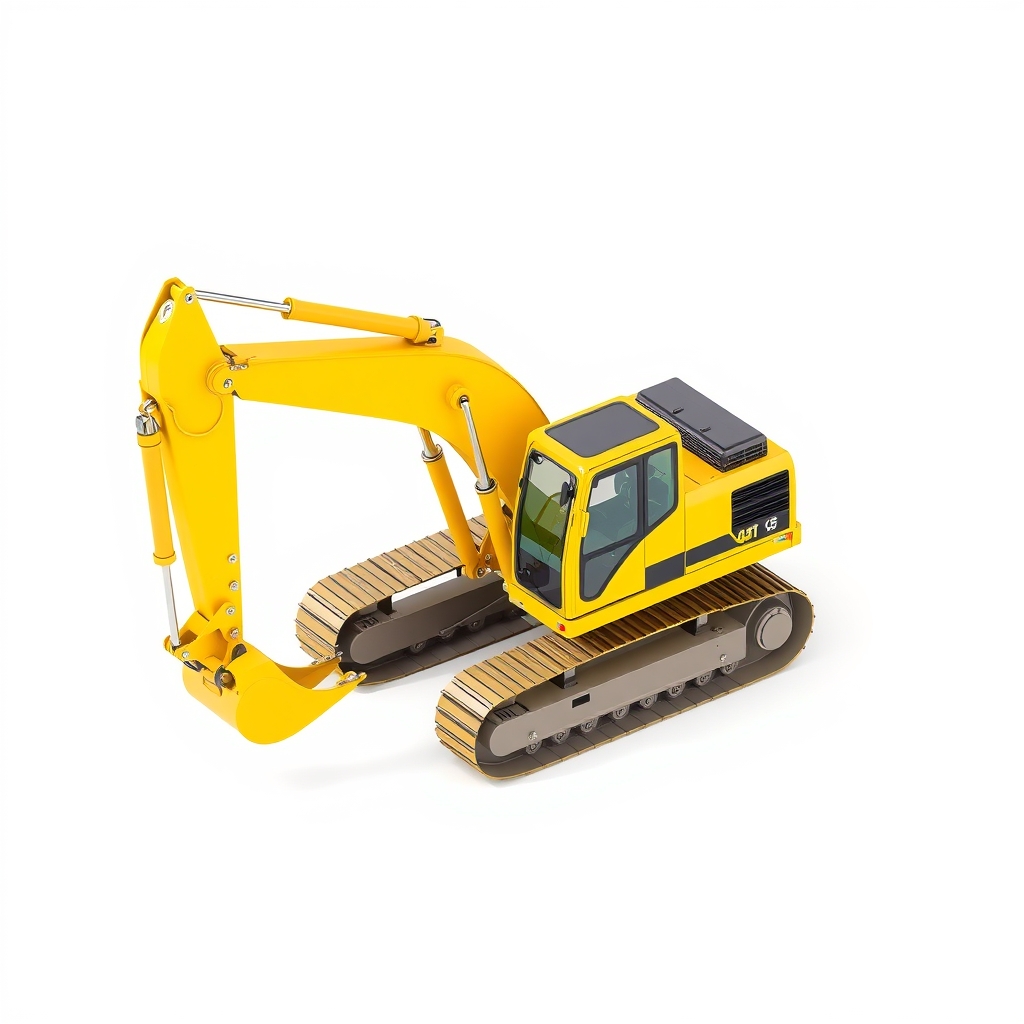
Excavator loading a dumper in an open-cast mine
01 Formula

The match factor formula

MF = (number of dumpers × loading time per dumper) ÷ (number of loaders × dumper cycle time). Loading time is the time a loader takes to fill one dumper. Cycle time is the full trip: load, haul, dump, return and spot. For one excavator, MF = dumpers × load time ÷ (load time + haul cycle). Burt and Caccetta extended it to mixed fleets of different trucks and loaders.

Match factor in the glossary →
02 Reading it

Below 1, at 1, above 1

MF below 1: too few dumpers, so the excavator stands idle between loads and the fleet sets the output. MF above 1: too many dumpers, so they queue at the excavator and the loader sets the output. MF of 1 is the theoretical balance where neither waits. Mines often choose slightly above or below 1 on purpose, depending on whether the loader or the trucks cost more per idle hour.

03 Worked example

A worked example with sample numbers

Sample values: one excavator fills a dumper in 3 minutes; a dumper's full haul cycle (haul, dump, return) is 22 minutes, so one complete cycle is 25 minutes. With 7 dumpers, MF = 7 × 3 ÷ 25 = 0.84, so the excavator waits. With 9 dumpers, MF = 9 × 3 ÷ 25 = 1.08, so dumpers start to queue. The averages say 8 dumpers (MF 0.96) is near balance.

04 Why plans miss

Why a match factor of 1 still misses plan

Match factor is a single number built from averages. Real cycles vary: one slow haul makes the next dumpers arrive together (bunching), so the excavator first queues dumpers and then waits with none. Averages cancel this out; a real shift does not. Zeng, Baafi and Walker built a simulation to measure this bunching effect, and a SAIMM paper argues deterministic sums are not enough to size shovel-truck fleets.

Play the Shift Call →
05 Try it

Play 100 shifts and see it yourself

The Shift Call below runs one excavator and your chosen number of dumpers through 100 shifts with realistic variation. Guess first how many shifts will meet the plan, then play. Payload presets use BEML's published figures for 35-ton and 60-ton class dumpers; load and haul times are sample values.

06 In the pit

Measuring match factor from live trips

In a running mine, the inputs come from the trip record: when each dumper arrived at the excavator, waited, loaded and left. OITDS dispatch records these times on every trip, so queue time and excavator idle time are measured shift by shift instead of assumed, and dumpers can be re-allocated when one excavator is starved and another has a queue.

OITDS truck dispatch →
Source

Burt & Caccetta, Match factor for heterogeneous truck and loader fleets (MODSIM 2005)

Match factor definition and its extension to mixed fleets.

Open the source →
Source

Zeng, Baafi & Walker (2017), A simulation model to study bunching effect of a truck-shovel system

Discrete-event simulation measuring production lost to bunching.

Open the source →
Source

Journal of the SAIMM (2007), shovel-truck fleet sizing

Deterministic calculations inadequate for fleet sizing; models bunching with queueing and matching.

Open the source →
Source

BEML BH35-2 and BH60M brochures

31,752 kg and 54,500 kg payloads used as game presets.

Open the source →
Mohit Sahu, Co-founder and Tech Lead, Minocular
About the author

Mohit Sahu

Mohit is a mining engineering graduate of NIT Raipur. He leads Minocular's product and engineering, from fleet dispatch to the drone and AI platforms.

The pit ⓘ

Plan says a shift. In how many of 100 shifts will it be met?

Result

Avg tonnes
Excavator idle
Queue / dumper
Your call

Questions about match factor

What is match factor in mining?

Match factor is the ratio of the rate at which dumpers arrive at a loader to the rate at which the loader can fill them. It tells you whether the loader or the trucks limit production.

What is the match factor formula?

MF = number of dumpers × loading time ÷ (number of loaders × dumper cycle time). For one excavator: dumpers × load time ÷ (load time + haul cycle).

What is a good match factor?

A value of 1 is the theoretical balance. Below 1 the loader waits; above 1 the dumpers queue. The right target depends on which idle hour costs the mine more.

Why does a mine with MF of 1 still miss its plan?

Because match factor uses averages. Variable cycle times make dumpers bunch, so loaders and dumpers both wait at different times in the shift. Simulation or live trip data shows this; the formula does not.

How do you measure match factor in a live mine?

From trip records: arrival, wait, load and departure times at each loader. Systems such as OITDS record these on every trip, so queue and idle time are measured, not assumed.

Related
GAME
The Shift Call
SOLUTION
OITDS truck dispatch
BLOG
The haul cycle in five parts
SOLUTION
Fleet management
See queue and idle time on every trip, shift by shift.
Book a Demo