Home · Blog · Fuel reports for mines
Blog · Fuel

Fuel reports every mine should run, and what each one catches

A mine needs four fuel reports: litres per hour per machine against its own baseline, idle fuel wastage, a refill record that checks every bowser fill against the machine's tank sensor and hour meter, and live tank levels so machines are refuelled before they stop. Together they turn fuel data into a daily list of machines and fills to check.

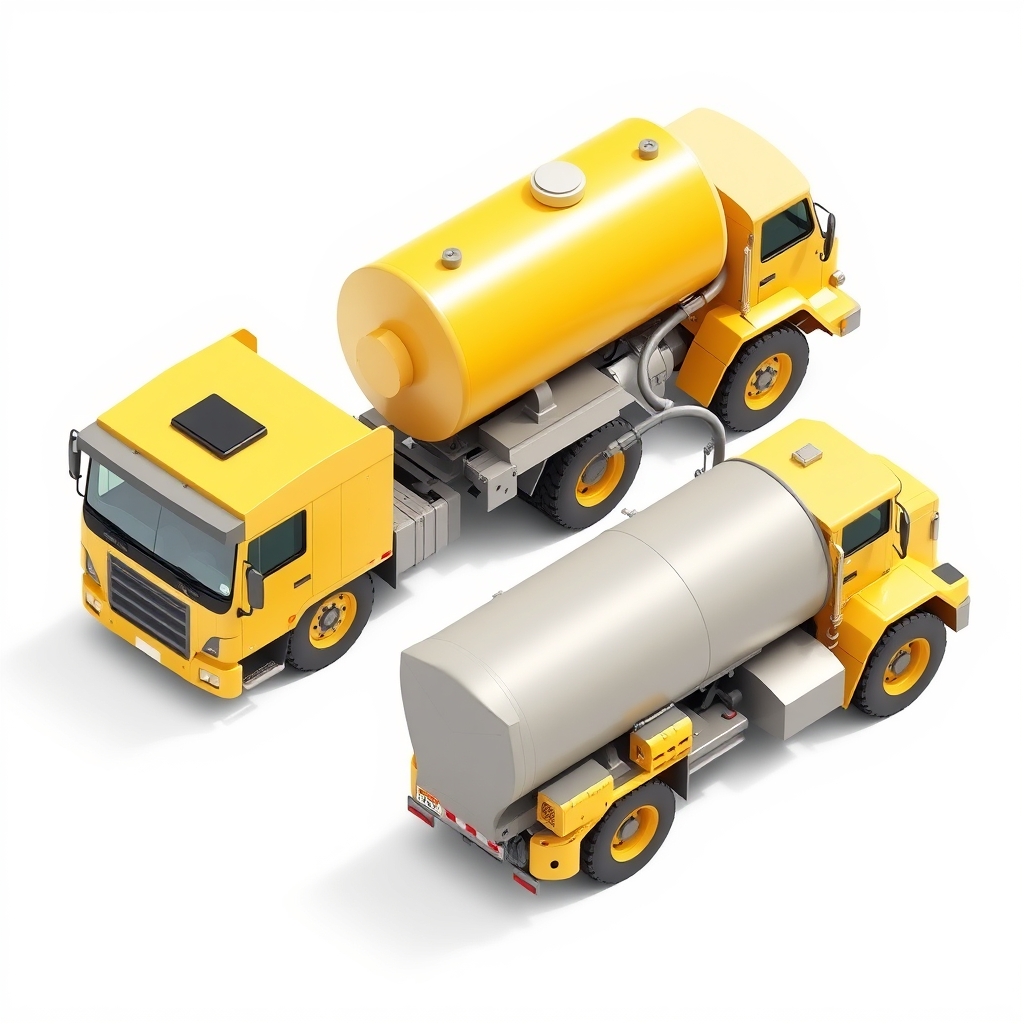
Dumper fuel tank with sensor data feeding mining fuel reports
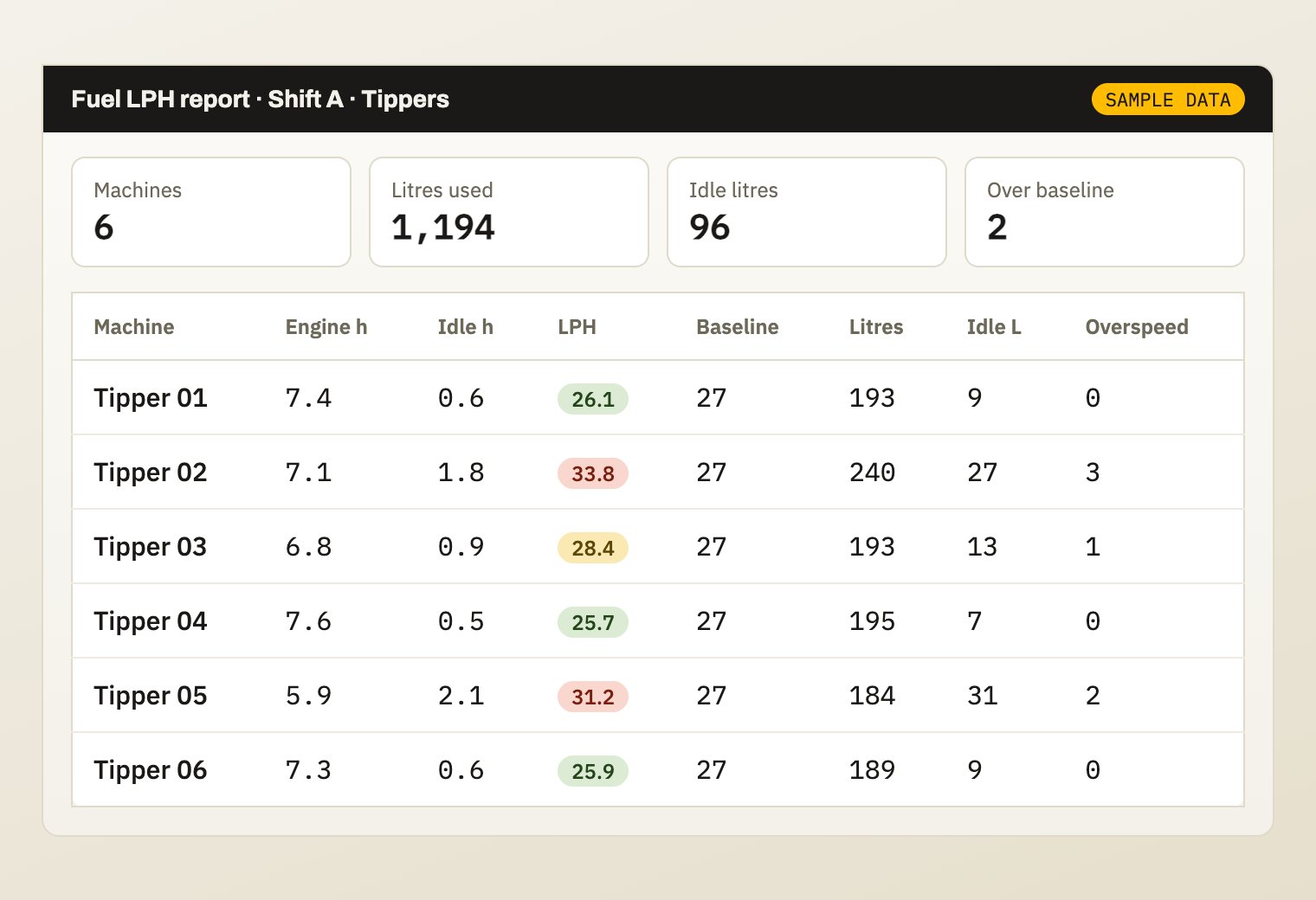
Fuel LPH report mockup: litres per hour per tipper against baseline, sample data
01 Report 1

Litres per hour against baseline

Litres per hour (LPH) is fuel burnt divided by engine hours, per machine and shift. On its own the number means little; set against that machine's own baseline it shows which dumper or excavator is burning more than it should. Colour it high, mid and low, split it by machine type (tippers, excavators, loaders, drills), and the shift engineer sees the outliers in seconds.
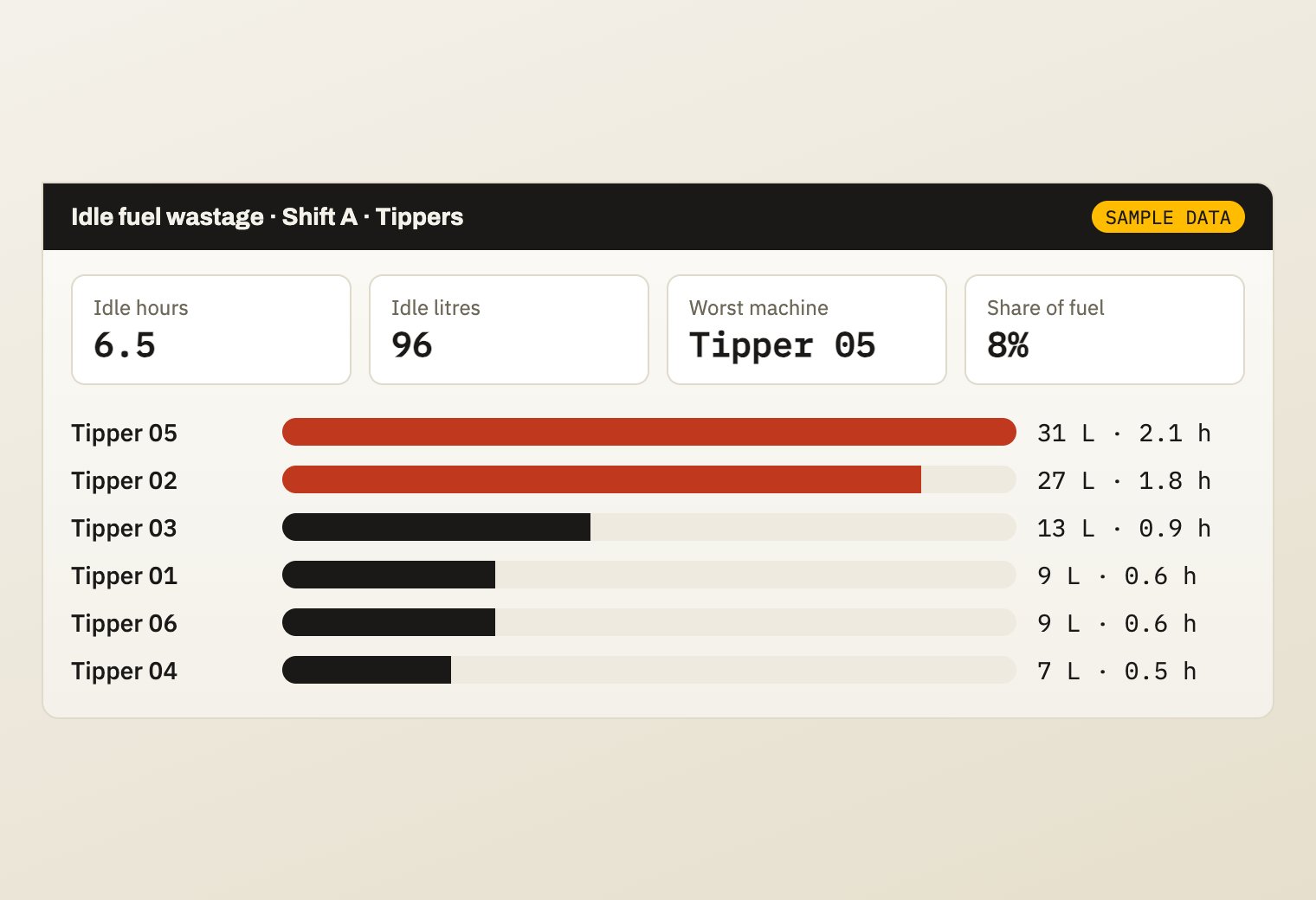
Idle fuel wastage report mockup: idle litres and hours per machine, sample data
02 Report 2

Idle fuel wastage

An engine running with no work done still burns diesel. The idle report adds up idle hours and the litres they cost per machine. It points to queueing at the excavator, long breaks with the engine on, or a dumper waiting at a crusher, so the fix is usually dispatch, not the machine.

Diesel per tonne cut by idle time →
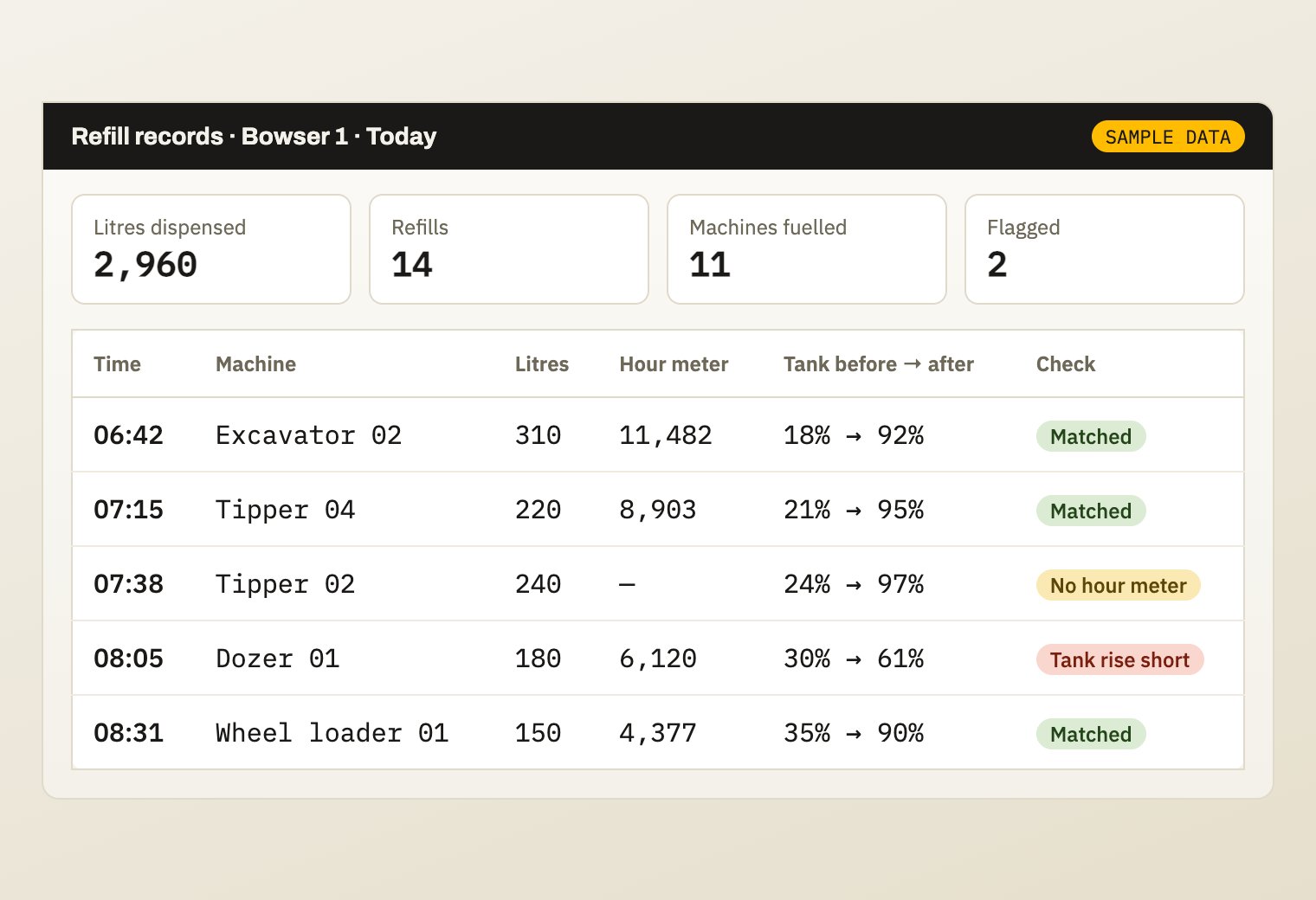
Refill records mockup: bowser fills checked against tank rise and hour meter, sample data
03 Report 3

Refill records and the refuelling audit

Every fill from a bowser or fuel station is logged: time, machine, litres and hour-meter reading. The audit compares litres dispensed with the rise in the machine's own tank level. A fill where the tank rose far less than the litres issued, or a fill with no hour-meter entry, is flagged for the fuel in-charge to check that day.

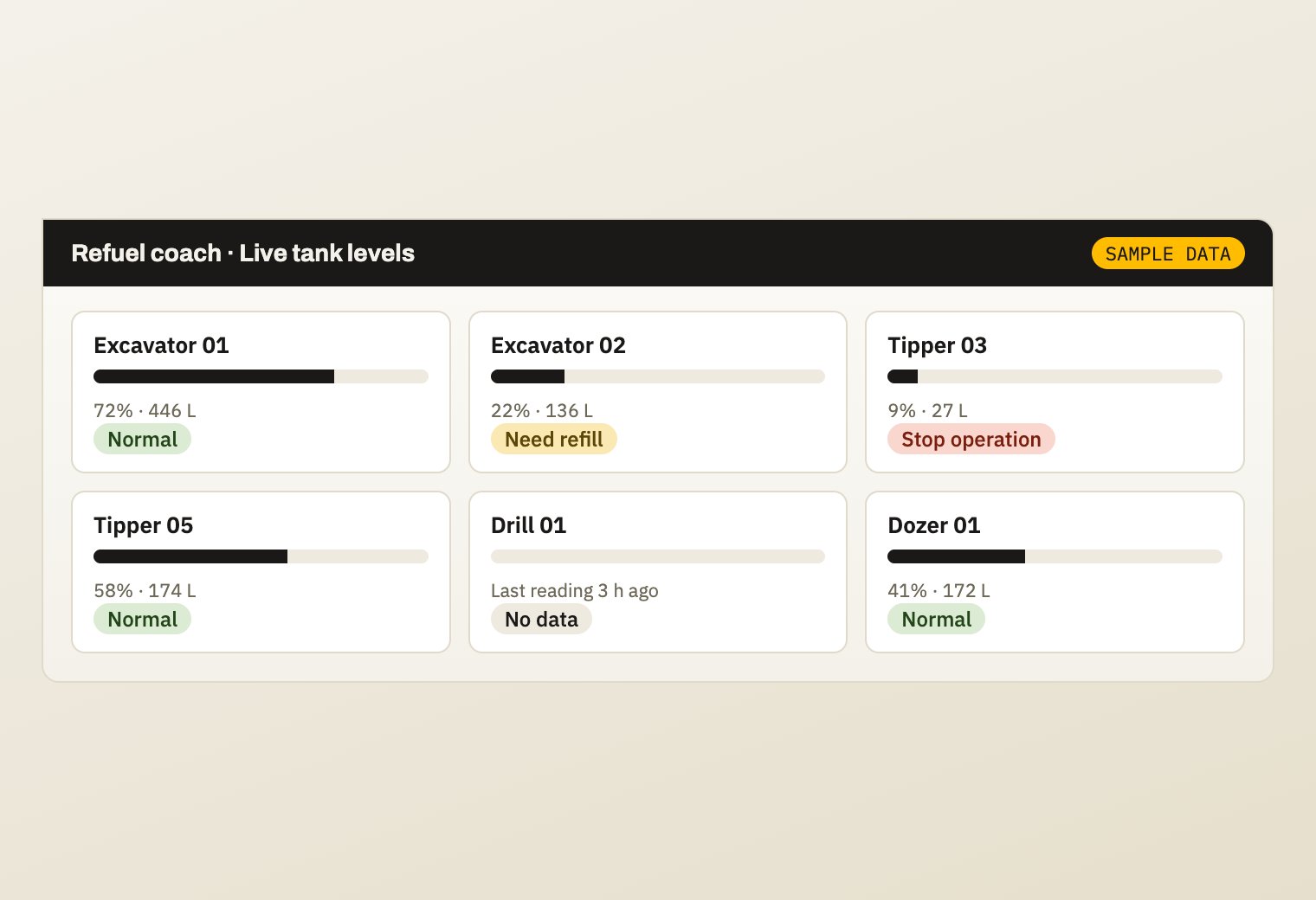
Refuel coach mockup: live tank level and refuel status per machine, sample data
04 Report 4

Live tank levels: the refuel coach

A live view of each machine's tank as a percentage and in litres, with a status: normal, needs refill, stop operation, or no data. The bowser operator plans the round from it, and no excavator runs dry mid-shift waiting for diesel. Machines showing no data are a sensor or wiring job for the maintenance team.

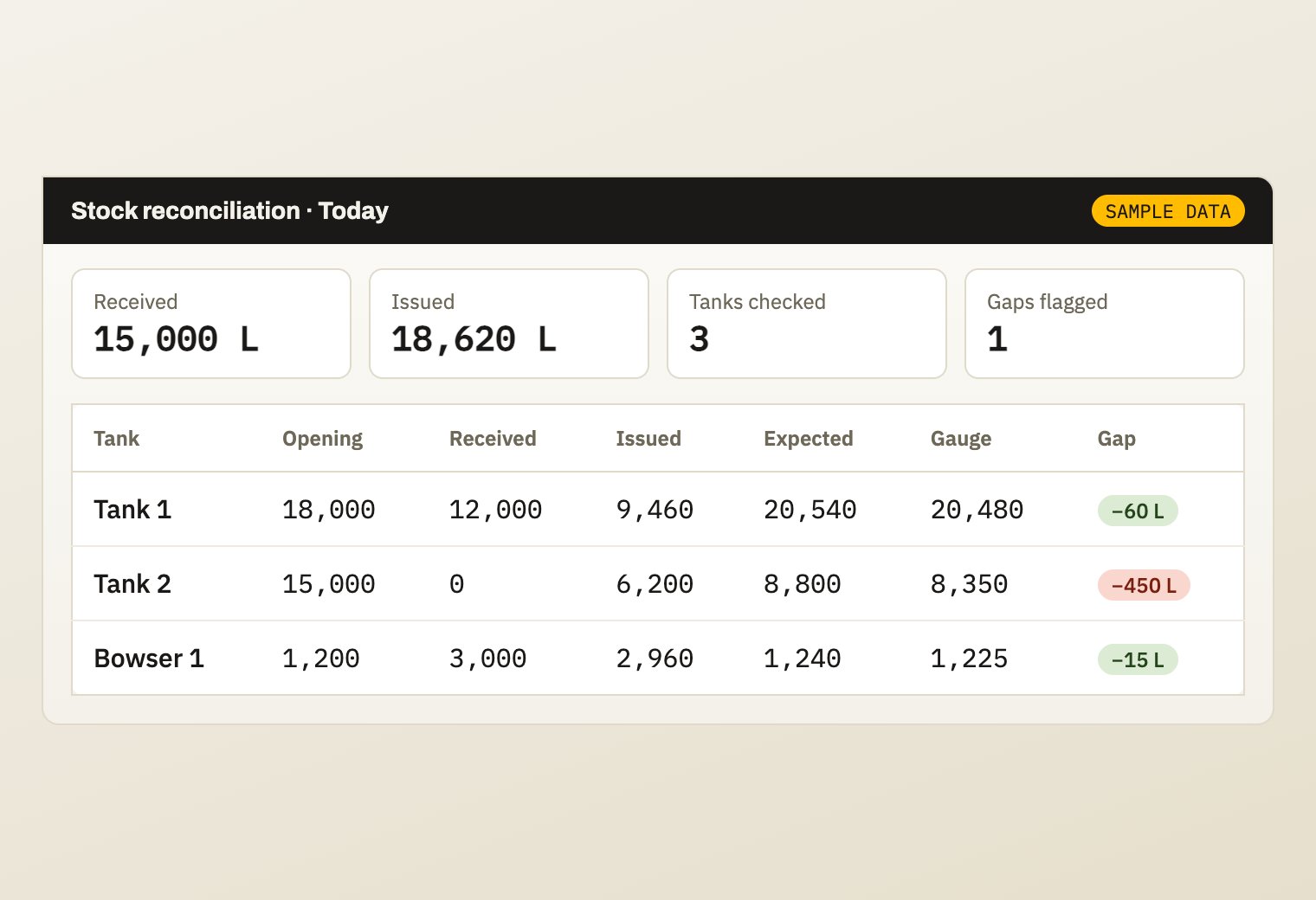
Fuel stock reconciliation mockup: opening, received, issued and gauge per tank, sample data
05 Report 5

Stock reconciliation

At the fuel farm the check is simple arithmetic: opening stock plus litres received minus litres issued should equal closing stock. Done daily per tank and per bowser, it shows a gap the day it appears, not at the month-end audit. The litres issued come straight from the refill records, so nothing is typed twice.

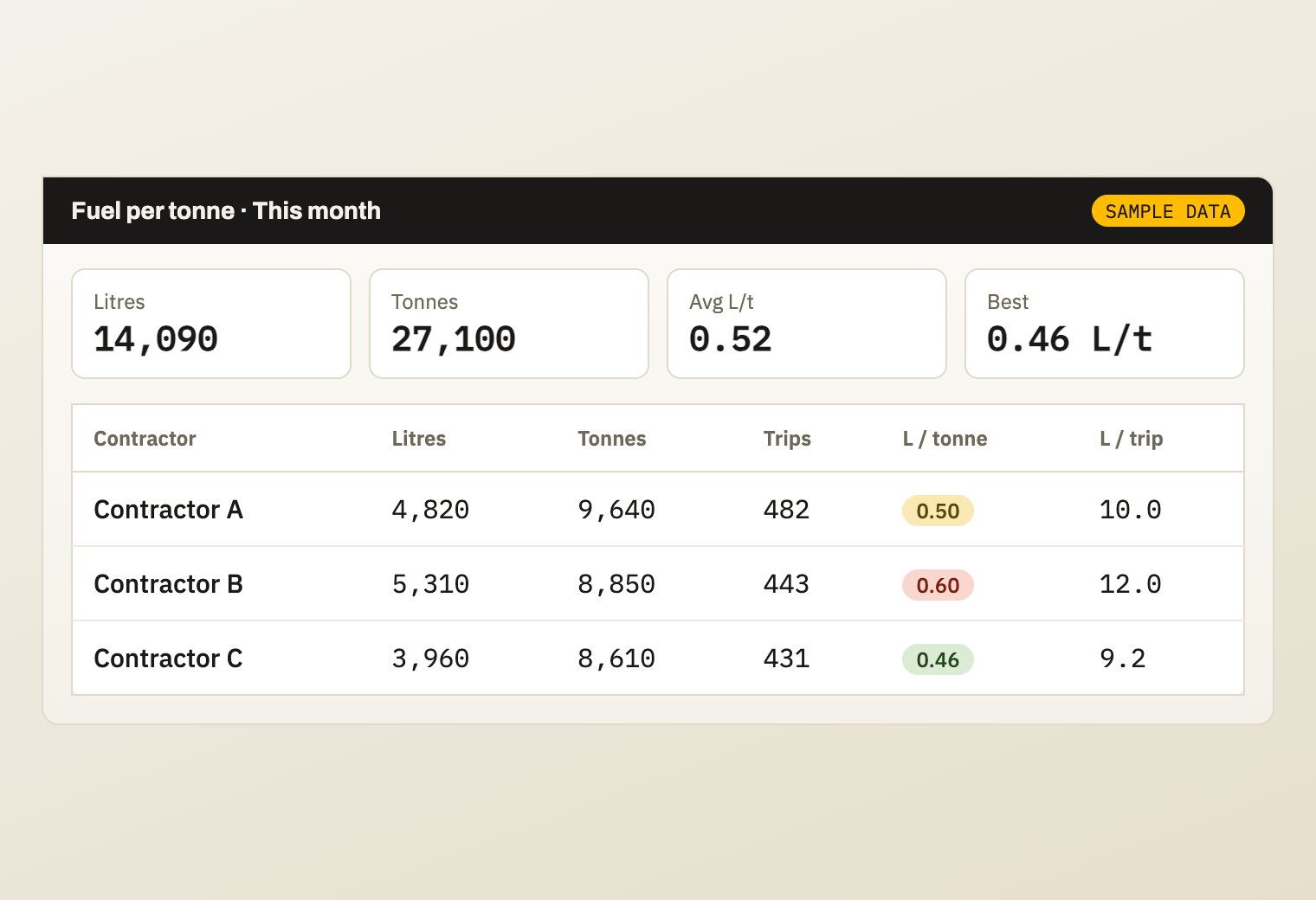
Fuel per tonne report mockup: litres per tonne and per trip by contractor, sample data
06 Putting it together

Fuel per tonne, not just fuel per hour

Joined with trip and weighbridge data, the same fuel figures become litres per trip and litres per tonne. That is the number a mine manager compares across contractors, pits and months, and the one that shows whether the fuel reports changed anything.

Mining fuel monitoring →
Puru Agrawal, Co-founder, Minocular
About the author

Puru Agrawal

Puru is a co-founder of Minocular. He works with mine owners and contractors across India on fleet dispatch, fuel and digitisation projects.

Questions about mining fuel reports

What is a fuel LPH report?

It shows litres of diesel burnt per engine hour for each machine and shift, compared with that machine's baseline, so machines burning more than expected stand out.

What is a refuelling audit?

A check of each fill: litres dispensed by the bowser against the rise in the machine's tank level and the hour-meter reading. Fills that do not match are flagged.

How is fuel stock reconciled at a mine?

Opening stock plus litres received minus litres issued should equal closing stock, per tank and per bowser, every day.

What data do these reports need?

Fuel level from tank sensors or OEM telemetry, engine hours from the tracker or machine, and fill records from the bowser or fuel station. Logbook entries can fill gaps where sensors are not fitted.

Related
CAPABILITY
Mining fuel monitoring
BLOG
Fuel management system for mines
CASE STUDY
Diesel per tonne cut by idle time
CAPABILITY
Reporting and analytics
See these fuel reports on your own fleet.
Book a Demo