
This post is about running the mine
Our post on OITDS in Coal India covers what the Ministry of Coal roadmap and tenders ask for. This one is about operations: what the system does on a shift, from the face to the despatch point.
In an open-cast coal mine, OITDS allocates dumpers to shovels and records every coal and overburden trip. Its value grows when the trip record is joined to the RFID gates and weighbridges the Ministry of Coal's surveillance measures already call for, so the tonnes that left the face, crossed the weighbridge and reached the siding can be checked against each other.

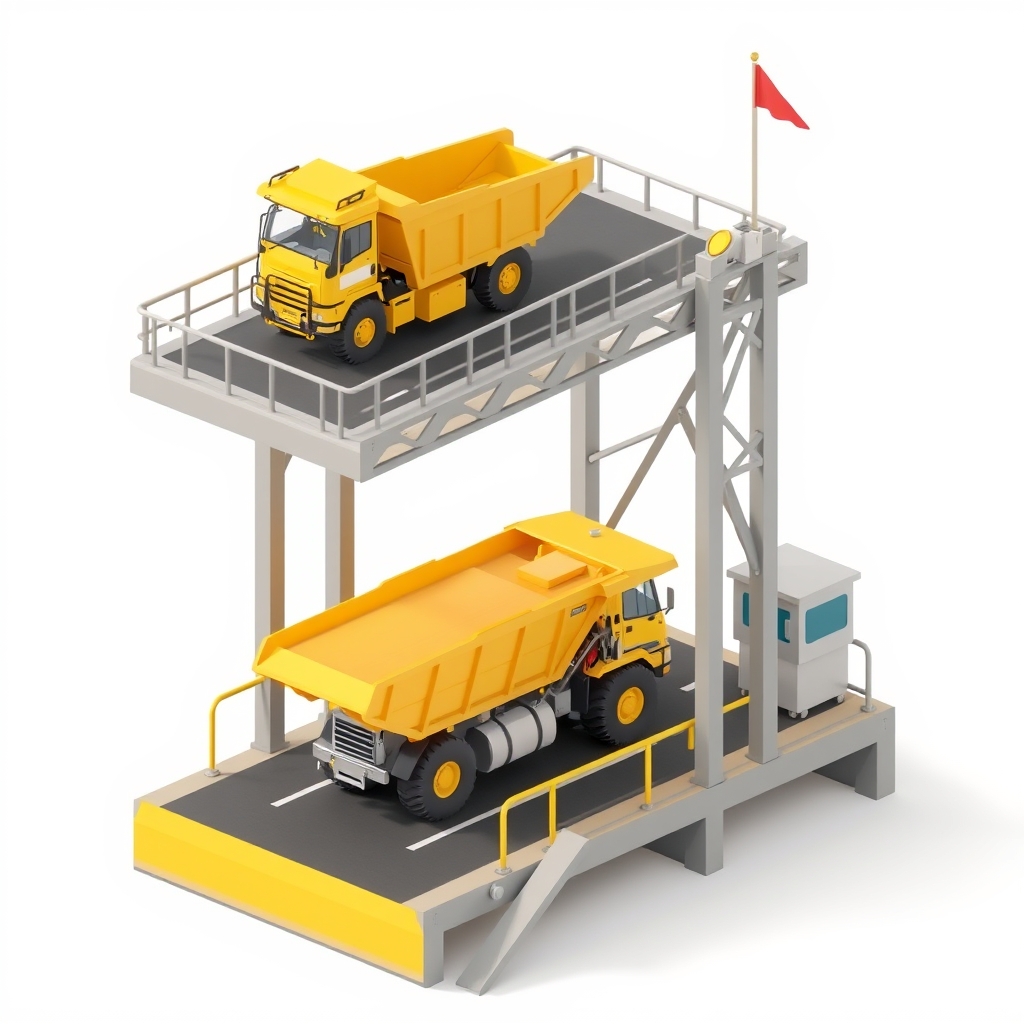
Our post on OITDS in Coal India covers what the Ministry of Coal roadmap and tenders ask for. This one is about operations: what the system does on a shift, from the face to the despatch point.
Coal benches and overburden benches run side by side, often with different contractors. OITDS sends each empty dumper to the shovel where it will wait least, and every trip is tagged coal or OB from the loading polygon and the dump area, so OB removal and coal production are counted separately.
Loaded time, haul, dump-area entry, dump body sensor, return and delay; the dumper, shovel, operator and contractor; and tonnes from the weighbridge where there is one, otherwise from the equipment. That record is what reports, bills and audits draw on.
A Ministry of Coal brief on its surveillance measures lists GPS/GPRS tracking with geo-fencing, CCTV and RFID boom barriers at truck entry and exit, with tags holding registration, contractor and tare weight, read at gates and weighbridges. When those reads land on the same trip record as the GPS track, a weighment without a matching loaded trip, or a trip without a weighment, stands out.
Useful exceptions: a loaded truck stopping off-route between face and weighbridge, gross weight below what similar trips carry, repeated weighments of one truck in a short window, and diesel drawn without engine hours to match. Each is a rule on data the mine already has, not a new device.
Coal moved from pit to stockyard to despatch point is tracked against the daily plan, and rake loading progress is visible while the rake is still at the siding. The Ministry of Coal's Technology Roadmap also points OITDS towards automatic allocation and links with machine health sensors.
Fuel per machine comes from tank sensors, OEM telemetry or a bowser fuel management system that reads the machine's RFID tag. Joined to trips it gives litres per tonne for coal and OB separately.
GPS/GPRS tracking with geo-fencing, CCTV, RFID boom barriers at entry and exit; RFID tags read at gates and weighbridges.
OITDS at Coal India mega mines; next step automatic allocation and integration with HEMM health sensors.
Puru is a co-founder of Minocular. He works with mine owners and contractors across India on fleet dispatch, fuel and digitisation projects.
It assigns each dumper to a shovel from live positions and queues, and records every coal and overburden trip with its time, equipment, contractor and tonnes.
Weighbridge readings and RFID gate reads are matched to the truck's trip, so tonnes per trip, contractor and shift need no manual entry.
It flags exceptions such as off-route stops, light loads, repeated weighments and fuel drawn without matching engine hours. It supports surveillance; it does not replace gates and CCTV.
Yes. Each trip takes its material from the loading area and dump area, so coal production and OB removal are separate.
That post covers government documents and tenders. This one covers daily mine operations.