

Home · Blog · OT-IT integration in mining
Blog · Integration

OT-IT integration for Indian mines: plant, machines and ERP on one timeline

OT-IT integration at a mine means bringing operational data (crusher PLCs, SCADA, weighbridges, machine telemetry) into the same system as business data (production plans, ERP, contractor bills). It is done with standard protocols such as OPC UA, Modbus, MQTT and CAN/J1939, read through a gateway, so every tonne, trip and stoppage sits on one timeline.

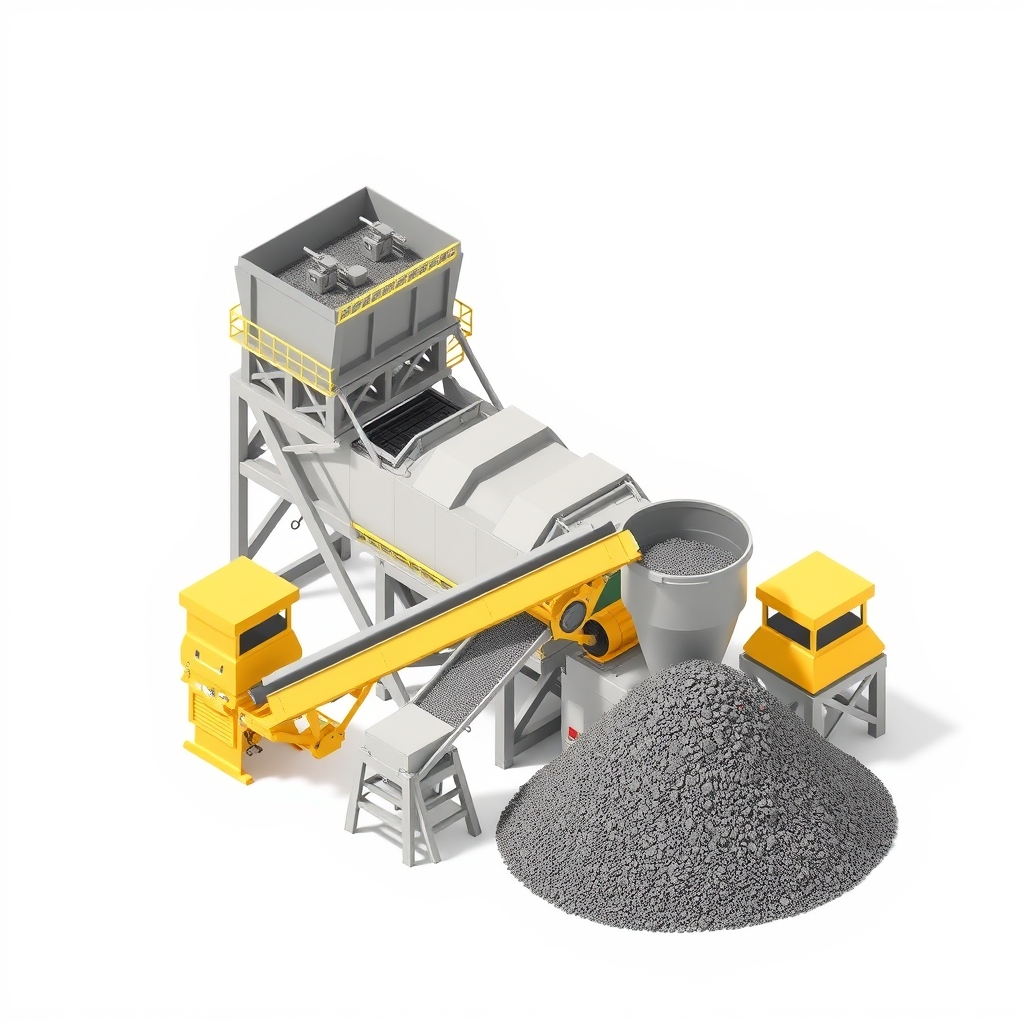
Crusher and conveyor whose plant data joins mine fleet data through OT-IT integration
01 Definition

What OT and IT mean at a mine

Operational technology (OT) runs the physical work: crusher and conveyor PLCs, SCADA screens, weighbridge indicators, machine controllers. Information technology (IT) runs the business: plans, ERP, HR and billing. At most Indian mines the two never meet, so the crusher log, the trip register and the bill are reconciled by hand.
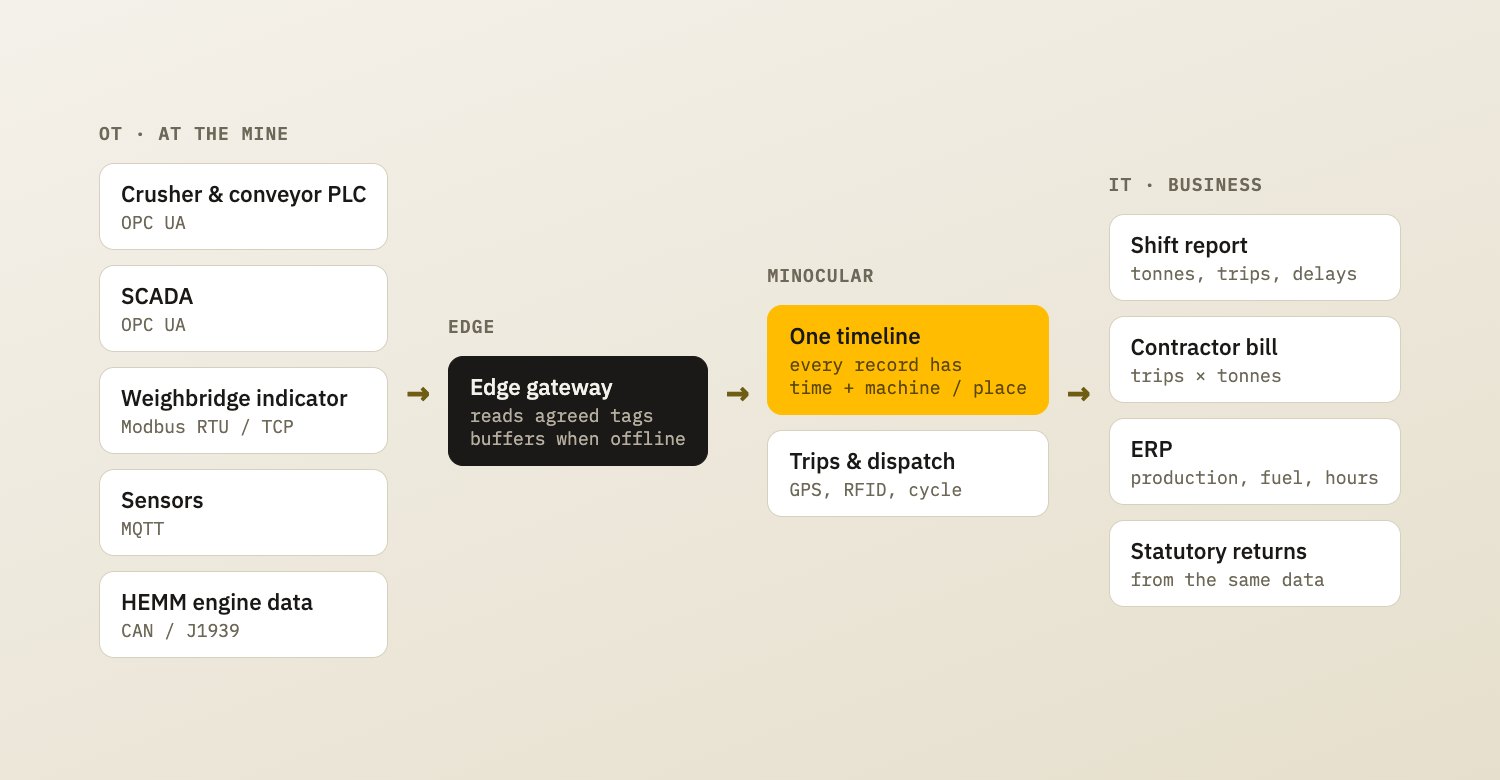
OT-IT integration workflow for a mine: PLC, SCADA, weighbridge, sensors and HEMM data through an edge gateway to one timeline, then shift report, contractor bill, ERP and statutory returns
02 Protocols

The four protocols that cover most of a mine

OPC UA for modern PLCs and SCADA. Modbus (RTU or TCP) for older PLCs, weighbridge indicators and meters. MQTT for sensors and gateways sending small messages over unreliable networks. CAN/J1939 for engine and machine data on HEMM. Between them they reach almost every device on a site.

Hardware-agnostic FMS →
03 Architecture

Read through a gateway, never write

An edge gateway on the plant network reads the tags it is allowed to and sends them out over an outbound connection. It never writes back to a PLC. This keeps the control system safe, keeps the plant's IT team comfortable, and lets data buffer at the gateway when the link drops.

No-network mining →
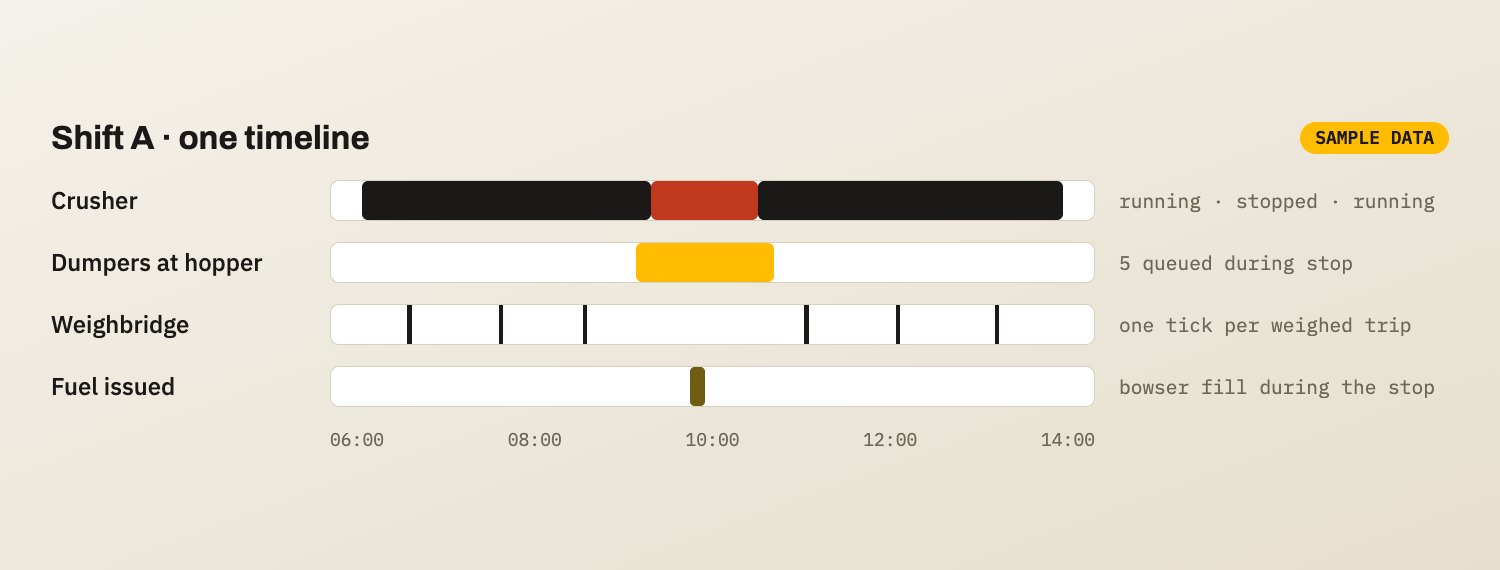
One shift timeline joining a crusher stop, dumpers queued at the hopper, weighbridge trips and a bowser fill, sample data
04 The join

Join on time and place

The value is in the join. A crusher stoppage lines up with the dumpers queueing at the hopper. Weighbridge tonnes line up with each trip. Engine hours line up with fuel issued. Once every record carries a time and a machine or location, the shift report builds itself.

05 IT side

Feeding ERP, not replacing it

On the business side the joined data flows out as reports and APIs: production by shift into the plan, trips and tonnes into the contractor bill, fuel and hours into maintenance and cost. The ERP stays the system of record; it just stops waiting for spreadsheets.

Reporting and analytics →
06 Where to start

Start with one join that pays

Do not start with every tag in the plant. Pick one question that costs money today, such as crusher idle time caused by too few dumpers, or weighbridge tonnes that never match the trip count. Connect the two systems that answer it, prove it, then add the next.

Mohit Sahu, Co-founder and Tech Lead, Minocular
About the author

Mohit Sahu

Mohit is a mining engineering graduate of NIT Raipur. He leads Minocular's product and engineering, from fleet dispatch to the drone and AI platforms.

Questions about OT-IT integration in mining

What is OT-IT integration in mining?

Bringing operational data from PLCs, SCADA, weighbridges and machines into the same system as plans, ERP and billing, so they share one timeline.

Which protocols are used?

Mostly OPC UA, Modbus, MQTT and CAN/J1939.

Does integration need write access to the PLC?

No. A gateway reads the agreed tags and sends them out. It does not write to the control system.

Where is the data hosted?

Minocular runs on AWS or Azure.

Related
SOLUTION
Hardware-agnostic FMS
CAPABILITY
Reporting and analytics
BLOG
Mine production reporting
SOLUTION
Coal mine digitisation
Map your plant and fleet data in one call.
Book a Demo